Emma Vidal, Tori Byrne
December 9, 2024 12:02 PM

It’s a brisk fifty-degree Saturday afternoon. The smooth but rich sounds of a tuba can be heard from around the hollow stadium, where soon family, friends, and fans will gather to cheer on the Grand Valley State football team. While the football team gears up in their newly renovated locker rooms, an average of 14,559 Grand Valley fans roam around the 6 million dollar expanded Lubbers Stadium. Three miles away, a similar warm-up clock ticks down, as the Grand Valley Division I club hockey team glides down the ice, awaiting the crowd’s roar as the buzzer echoes throughout the arena. What follows is the piercing silence, louder than the athletes’ breath, as there are only 50 fans in the crowd.


Image Credit- GVSU Website
Grand Valley is currently home to 22 teams under the supervision of the athletic department and 36 club teams under the recreation department. Over 600 of those athletes attend practice, recovery sessions, meetings, and classes, with peace of mind knowing they are supported by scholarships. The latter 700 of those athletes rely on donations and personal accounts to fund their seasons. About 34% of varsity athletes receive anywhere from $5000-$6500 in scholarships and have resources to fundraise the rest, while the average club athlete has to pay full tuition, plus club fees that range from $350-$4000 a year, based on average expense amount amongst all clubs at GV, with limited resources to fundraise.
What differentiates these athletes is the label of an athletic sport versus a club sport, which the university determines. With varying athletes supporting or complaining about their programs, everyone seems to be left in the dark about what certain athletes are entitled to, this boils down to the direct communication between athletes and their supervisors. The athletic directors and club coordinators have evidently fallen short when it comes to addressing the concerns of their athletes on sport expansion, budgeting decisions, recognition, fundraising, university support outside of athletics, facility upgrades, and Grand Valley’s place compared to neighboring Division II schools.
The first complaint addressed by Athletic Director, Keri Becker, was why certain sports are classified as clubs here, and classified as athletics at other Division II schools. Sports like men’s soccer, men’s and women’s hockey, men’s volleyball, and men’s lacrosse are all considered club sports here, when universities within our division like Saginaw State University, Ferris State University, and Wayne State University categorize them as athletic teams.


Grand Valley was established in 1960, but the university didn’t add their first varsity sports teams until 1965 which were men’s basketball, men’s and women’s crew, men’s golf, and men’s tennis. Becker clarified the university was originally structured with a certain number of athletic teams, since then the university has decided when to add more teams based on whether there are donors, room in the budget, staff for the new team, facilities, travel essentials, etc. Sport expansion is a long, hefty process that Athletic Director, Keri Becker commented on.
“We just added women’s wrestling this year. Yes, a donor provided the funding to operate the teams, but it takes a lot. My compliance person now has 60 more athletes. My athletic trainer now has 60 more athletes. We have to take the facilities into consideration, the space available, trainers, clients, academic advising and game operations. It’s a much bigger conversation…” said Becker.


Some of the club sports teams recognize the moving parts and criteria essential for varsity sports, while others are uninformed as to why their sport is only provided at the club level. Junior club hockey player Brendan Walk, enjoys being a member of the club team and understands the sports position among others.
“The reason why it’s not a NCAA program is due to the limited funding and the fact that the travel to play other teams would be too far since there is only one other NCAA Division II or III team in Michigan,” said Walk.
Adrian College is the only Division II hockey program in Michigan, meaning if Grand Valley decided to expand the hockey program, the team would have to travel out east to compete against teams like Assumption University in Massachusetts, or Franklin Pierce University in New Hampshire. This travel would dramatically exceed the amount of funding the school would be able to provide for at this moment. So, unless other nearby universities organize NCAA Division II hockey programs, the team understands there’s nothing Grand Valley athletics can do.
Jonathan Neace was another club athlete who understood the outside factors contributing to the lack of expansion being the men’s club volleyball team.
“Unfortunately at this moment, there are not enough teams here in Michigan or in the area that could make this happen,” said Neace. “Funding would be a big issue because any sport is not cheap and it is hard to take that much of a gamble on an up and coming sport.”
On the opposite side, recent graduate and member of the Grand Valley Cheer team, J’lenet Davis, has enjoyed being a cheerleader for the university for the past four years, but relayed some frustrations with the university’s communication and recognition for her team. Although the team promotes the school, Davis clarified they’re not considered a varsity sport or even a club sport.
“Athletics have not addressed any of the complaints,” said Davis. “Cheerleaders have been trying to get more recognition and funding for years and years now. I also feel like it is hard to address these things because we don’t want to steer us away even more from being considered a club or sport and try to remain peaceful.”
This is an area where the university could be better with their communication. Club Sports Coordinator, Andrew Rolls says the coordinators try their best to pass along information and address complaints.
“Yeah we definitely get complaints year to year,” said Rolls. “And a lot of times we only talk to E-boards. If you’re not on the E-board you don’t really know the process of things.”
While Rolls claims E-board members understand the logistics behind funding, Junior Club Hockey Captain, Carson Wood gave further insight as a member of the E-board, while balancing being a student-athlete.
“I know the year before I came here the school cut the funding down a bit, and we have definitely had problems since then that the program didn’t have before,” said Wood. “The only other thing I’d say is that being on the E-board, its very difficult to try to raise money, while worrying about playing and staying healthy, and also paying to play here.”
While cheerleader J’Lenet Davis’ situation is different compared to those athletes on an established varsity or club teams like Carson Wood, it doesn’t negate the fact that the university should improve their communication with all athletes supporting the school, not just members on the E-board.

The 2024-2025 Club Team Presidents (E-board members)
Student engagement and recognition were other issues brought up by athletes as well as students. Varsity athletics receives revenue from ticket sales, merch sales, concessions, as well as donations from students and the public, while club sports don’t have that same opportunity. The lack of awareness and low attendance numbers are factors affecting their opportunity for possible donors and sports expansion. Olivia Foster is a senior at Grand Valley State University, completing her bachelor’s degree in computer science. She is an active member of the Laker community; working at the tutoring center, participating in the Women in STEM club, and actively supporting Laker athletics. However, within her four years at the university, Foster doesn’t understand the structure of the athletic department.
“In my four years as a Laker, I never understood what is considered a sport,” said Foster. “Football and athletics are a huge part of Grand Valley’s culture, so you would think they would educate the students on how the athletics are run and why some mainstream sports like men’s soccer aren’t a part of their program.”
It is apparent that Foster isn’t alone, oblivion is more common among most Grand Valley students.
In a recent poll sent out to Grand Valley students, 13 of the 23 students understand the difference between athletic and club sports. However, in the same poll, 14 of the 23 students didn’t know that GV’s men’s soccer, men’s hockey, women’s softball, and cheerleading teams are all considered clubs/spirit groups and not part of the athletic department.

It is clear that Grand Valley advertises the separation of club and athletic sports, but doesn’t elaborate on which sports fall into each category. Students attend college to receive an education, find their own identity,make connections, and find their place at the university. Valparaiso University expressed the importance of varsity athletics for university students by stating, “College athletics promotes school spirit and unity, which allows students to take pride in and feel connected to the higher educational endeavor.” If students don’t understand their university’s athletics system it can create a disconnect between the student body and the athletic program, which impacts the school spirit, sports engagement, community-building efforts, revenue, and takes away connecting opportunities for students. Within the same poll, only 15 of the 23 students have attended a Grand Valley club sports game, while 19 of the 23 students have attended a Grand Valley athletics game.


The students expressed that the most common avenue for awareness of Grand Valley club sports games was word of mouth, while the most common avenue for awareness of Grand Valley athletics games was social media. The opinions of Grand Valley students offer an outside perspective on university sports and evaluate the exposure of club versus athletic sports.
Highlighting the unawareness among students lays the foundation for what questions need to be answered. Club Sports Coordinator, Andrew Rolls, gave insight as to what the Recreation and Wellness organization does to promote their club teams:
“I feel like we do a really good job internally. We do daily posts on Instagram, we do a lot of blog posts and stuff on our website,” said Rolls. “But unless you’re following our accounts or club sports , it can be harder to realize it exists. We’re still trying to find ways that we can get Grand Valley to advertise them more so people know they exist and want to come to games.”
While the club sports media outlets do their best to promote their teams, the university itself could do more to advertise this top tier program they claim to have.
“There’s still times when I talk to people at school, and they’re surprised that we have a hockey team,” said Junior club hockey player, Tristan Avoletta. “For our competitiveness and fan support, it’s hard to grow without the advertising of our school.”
With recognition comes money, and funding and budgets were items numerous students had opinions on.
Varsity programs at GV are subject to their own slice of funding also known as the athletic budget that Athletic Director Keri Becker delegates. The budget for all athletic sports as of July 2024 was set at $8.8 million, that number is historically based on ticket sales, advertising revenue, camps, clinics, and all the other fundraising events.
“Most of the budget goes towards salaries and then that leaves the amount for all operating costs. The operating budget is what I allocate out to our different verticals within athletics; compliance, student-athlete health care, marketing, promotions, tickets, athletic communications, athletic training,” Keri Becker said when asked how she sections the athletic budget.
Becker highlighted the rest of the budget after all that, is separated amongst the varsity teams. That does not cover all their expenses though, so most of the teams fundraise anywhere from 50-70% of what they spend. So even athletes under the NCAA have to fundraise their expenses. To give some perspective on what Grand Valley athletics offers compared to Saginaw State University and Ferris State University, general fund budgets were obtained through Freedom of Information Act requests. The budget allocated for Grand Valley’s football program for 2024 was $1,332,590. Saginaw State’s and Ferris State’s football teams were delegated $309,122 and $2,466,028 respectively. Grand Valley sits somewhere in between these two universities, which is something many students may not know.
One athlete who expressed some frustrations with the budget is GV swim and dive athlete, Zachary Wheeler.
“…you still pay for everything all college students pay for. Roughly a little over $30,000 (a year) including living, meal plans, and textbooks,” said Wheeler. “The bus for the training trip to Florida is about $400 and you are responsible for buying your own fast food on the bus there and on the way back. You are also responsible for your food while you are there for one week, which came out to $150.”
Every player and team wants more money but the decision isn’t up to the teams. Like Becker clarified, it is based on historical data and what the university is able to offer.

Grand Valley State student-athlete, Melia Williams, is a senior in the 2024-2025 academic year. Her specialty in sprints and hurdles earned her a spot on Grand Valley’s track and field team. Like other Division II athletes, Melia wasn’t promised anything regarding scholarships. Fortunately, she received an initial book scholarship, covering the cost of textbooks and materials needed. However, athletes have the opportunity to receive more money based on their performance and value on the team.
While scholarships are a separate section aside from the general fund budget, they are another avenue students desire when deciding whether or not to attend the school, stay with the school, or in this case give an idea of what these students understand they will be paying.
“For the track program, it depends on the impact you make on the team. If you come and never make the conference meet, or like if you never hit qualifying time you don’t get more money (scholarships).”
Melia Williams, Track and Field
For an independent sport such as track and field, the student-athletes’ success determines the amount of money they receive and what they can earn. This is the case for other varsity sports as well. Freshman Mason Kirn is a preferred walk-on for Grand Valley’s football team, which means he had guaranteed a spot on the roster but wasn’t promised any type of financial support for being an athlete at the university. Kirn pays 15,140 in tuition per year, which is the common rate for all Michigan residents attending Grand Valley. Similar to the track and field team, Kirn expressed that the football team’s scholarships are distributed to successful and loyal players.
“It (the scholarships) varies from player to player,” said Kirn. “You’re better players, like your seniors, are gonna get a little bit bigger of a cut, than your freshman.”


While athletes like Wheeler, Williams, and Kirn make it clear they understand the scholarship side of their respective teams, what’s not been made clear on the university’s side is explaining to these athletes the entirety of the budget and where it goes and why certain teams are getting less and others are getting more. Wheeler expressed his aggravations with the budget, the next step would be for the athletic department to improve their communication and relay the valid reasons as to why it is the way it is.
Keri Becker’s response to some of the team budget differences were also based on the amount of players.
“We basically try to budget everybody in a way that’s based on, you know, the women’s golf team number is smaller than the baseball team, six student athletes versus 40,” said Becker. “So we do fluctuate based on that.”
While FOIA requests were not acquired to show budget for the swim and dive team, it’s possible to say considering the team currently has 66 members, compared to other smaller teams like golf or tennis, swim and dive could have a larger budget in comparison. Budget frustrations like these, could be squared away if the university decided to address them sooner rather than later.
Not all opinions were negative though, athletes did commend Grand Valley for their support to athletes in all aspects of their student careers. The school does its fair share to provide its athletes with opportunities within the university such as access to certain advisors at the Academic Success Center, support in career development, and campus employment opportunities. For Williams, the academic advisors helped her gain an opportunity for her degree.
“My freshman year, when I wanted to write for the Lanthorn, I had applied but didn’t hear anything back,” Williams states. “But then, I talked to my academic advisor about it, and the next thing I knew they were emailing me to set up an interview.”


Articles written by Melia Williams, Lanthorn
As varsity student-athletes, both Kirn and Williams understand what they are entitled to as Grand Valley State athletes academically and financially. The transparency between Grand Valley’s athletic department and certain varsity athletes is clear and perpetuates a healthy environment for success on and off the field. The goal here is for the coordinators to spread this information throughout every sports team, at every level for the betterment of the campus.
Funding, however, was not the only concern raised by swimmer Zachary Wheeler. Athletic facilities and trainers were other concerns. Wheeler and some of his teammates feel the trainers are inaccessible and facility upgrades should be prioritized.
“(Grand Valley’s pool) was built in 1983 and is extremely outdated compared to other Grand Valley athletic facilities,” stated Wheeler. “The six-lane pool has caused our coaches to create more practice times, keeping them (the swimmers) there longer.”


The bottom right picture credited- GVL / Macayla Cramer
The most recent renovation was towards Lubbers Stadium in 2024, but other athletic facilities such as the Harris Family Athletic Complex added a 22,280-square-foot expansion and 3,900-square-foot renovation in August 2023, costing 14.1 million dollars. Becker identified faulty facilities such as the pool but emphasized the lack of funding as the main issue.
“It’s a 30 million dollar problem, so it’s not easily solved, but that’s the hope right?” said Becker.
Identifying the issue and stressing the complexity of the problem demonstrates the desire for change, but is that communicated to the athletes? The lack of transparency between directors and coordinators to the athletes harms the athlete’s experience in the sport and perpetuates the idea of unrecognition. For a swimmer like Wheeler, seeing the board of trustees and Becker renovate or expand other athletic facilities, but not the pool, can create a negative connotation on Grand Valley’s athletics. Wheeler aimed his frustration toward the fact that Grand Valley’s swim team has consecutively brought championships to the school, ten to be exact.
“A pool is a huge ordeal for the university to build, but there is no reason why a top four university in the nation for swimming should have a lackluster facility.”
zachary wheeler, swim and dive
Grand Valley is widely acknowledged as the leading Division II school when it comes to varsity athletics, and while concerns have been presented from both levels, Keri Becker wanted to stress Grand Valley’s contributions compared to other schools in their division.
“Compared to other Division II universities, Grand Valley has a robust program,” Becker stated.
Neighboring universities like Calvin, Saginaw State, Ferris State, and Wayne State, all have under 25 club teams while GV has around 36 teams. Many club athletes also may not know that other club programs either don’t get a budget from their university or receive much less compared to Grand Valley.


Club Sports Coordinator, Andrew Rolls added to that point stating:
“Majority of our teams now do have coaches, just because that is something Grand Valley is helping to pay for, so teams aren’t having to pay out of pocket for it now.”
Upon speaking with a couple athletes from Saginaw State University and Ferris State University, their statements confirmed the idea that other schools don’t necessarily have the same benefits as Grand Valley.
“Our coaches are currently the co- presidents, dads, so it is completely volunteer,” said co-president of Saginaw Valley’s Women’s Club Basketball Team, Allison Austen.
Club basketball was not the only sport with a volunteer coach among other Division II schools, hockey was the other.
“We also don’t have a coach, our president kind of just directs us and he doesn’t get paid,” said Ferris State’s Men’s Club Hockey athlete, Lucas Hicks.
These comparisons are definitely areas that many student athletes at Grand Valley are not fully aware of.
“I would say that we are more organized than some and less organized than others,” said Grand Valley’s Men’s Club Volleyball member, Tyler Hopper. “We fall somewhere in the middle where we have coaches and whatnot, but no real structure outside of our biweekly practices.”
Club athletes are grateful for the funds they receive from the school but they also visibly see what other schools are receiving compared to Grand Valley.
“We have lost a lot of potential players to other schools who also can’t offer them scholarship money, but at least offer them free hockey,” said Senior club hockey player Josh Suzio.
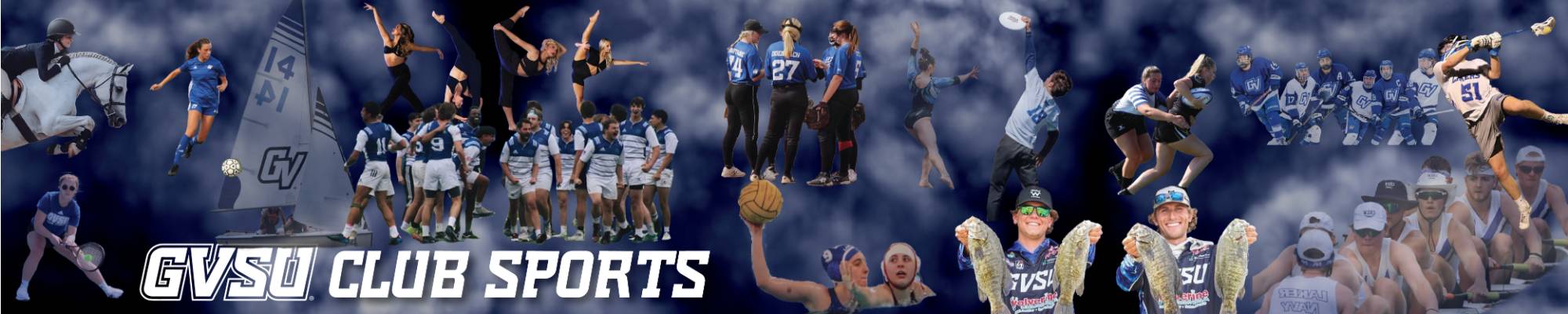
What was consistent throughout the interviews conducted with club sports athletes was their agreement of what a club sport is. According to GV’s Club Sports website, “GVSU Club Sports bridges the gap between Intramural and Varsity Sports. Club Sports provide a team environment for students who are looking for a more competitive and intense experience with a balance of time and commitment.” Many athletes have explained what attracted them toward GV’s club program was its high level of competition without overwhelming commitment. Men’s club lacrosse athlete, Caleb Lowell said Grand Valley’s combination of high-quality sports and academic rigor played a role in his decision to attend the university:
“We have a lot of guys who either had offers from highly talented programs or transferred from highly talented programs,” said Lowell. “I picked GV because it allowed me to focus more on school while still playing for a highly ranked MCLA school.”
Caleb wasn’t the only club athlete who recognized he could’ve played at the NCAA level, but chose to attend Grand Valley and play at the club level. Junior, club ice hockey athlete, Brendan Walk also touched on the pros and cons of opportunities elsewhere.
“A lot of guys that play club could have played for other NCAA schools but usually those schools are really small and you don’t get the whole college experience…,” said Walk.
The university and its club sports program is supposed to function primarily as student-led, with less commitment, while maintaining a high level of competition. Most club athletes recognize if their talents could’ve gotten them further, but ultimately made their decision based on the benefits of Grand Valley’s Club Sports program.
“(Club athletes) like being the ones to run their team. That’s what makes the club sport concept so great. Still good competition to compete in but also the chance to make their teams however they want it,” said Club Coordinator, Andrew Rolls.


Grand Valley has done well with communicating its purpose of club sports and it’s made obvious what’s expected of varsity athletes compared to club ones. All athletes understand there’s a divide, but there can never be enough communication between all members involved, especially those running the programs. Reassessing communication is the key to the issue. Transparency in budget allocations, providing equitable support for all athletes, and also promoting club and varsity sports are ways to progressively move forward.
“I don’t have any complaints about the club sports program, I think its run phenomenally and is very supportive and a great experience overall,” said Caleb Lowell.
 Tori Byrne Portfolio